
I guess the real question is CAN you freeze butternut squash? And since I’m writing a whole article about it, obviously – yes. You can. Preserve your harvest and have this sweet orange vegetable for months in your freezer! Here we’ll learn how to freeze butternut squash in two ways – 1) raw and chopped or 2) as butternut squash puree. It’s super easy to do and you only need a knife and freezer bags with zippers. And of course the squash.
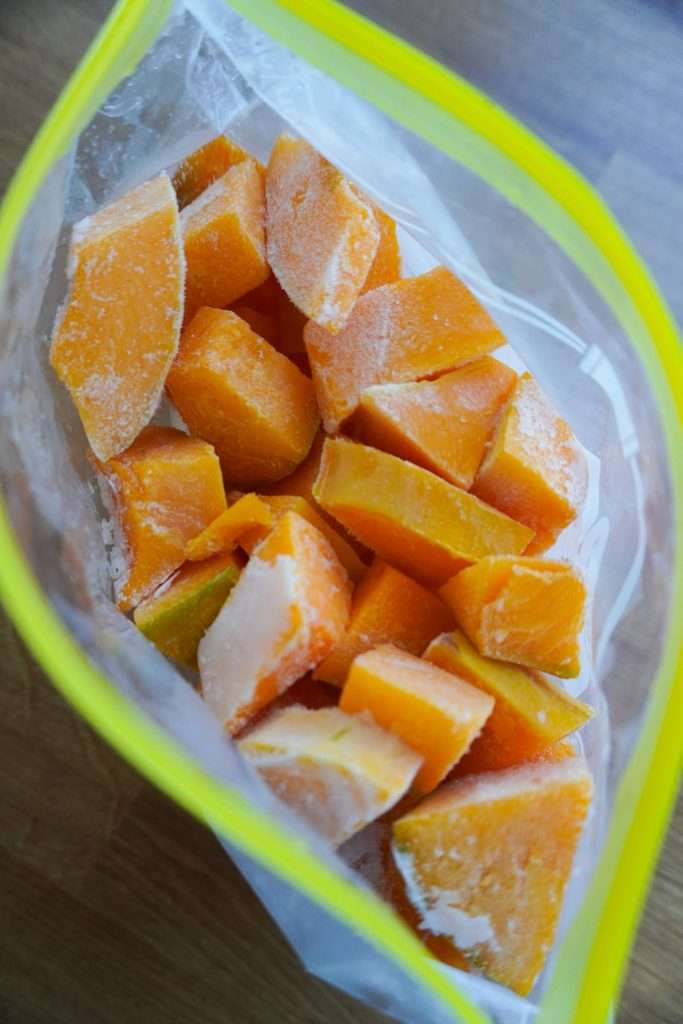
Freezing butternut squash is quite practical and great if you’re making soups, curries or even desserts. Once you’ve frozen it, you don’t need to peel it, you don’t need to chop it or scoop out the seeds. Because you’ve already done it all while you were in the process of freezing that giant butternut pumpkin. Now let’s get into how to do it!
Method 1: Freezing Chopped Raw Butternut Squash
To me, this is my favorite way to freeze butternut squash, because it’s easy and allows quite the flexibility when you’re cooking! Freezing butternut squash this way is best if you’re going to use a some of it in soups, stews or curries. You could also use it in baking recipes, but you will first need to thaw and process it. The beauty of this method is that you don’t need to use up the entire batch for one recipe aka the squash won’t be the main ingredient in your meal.
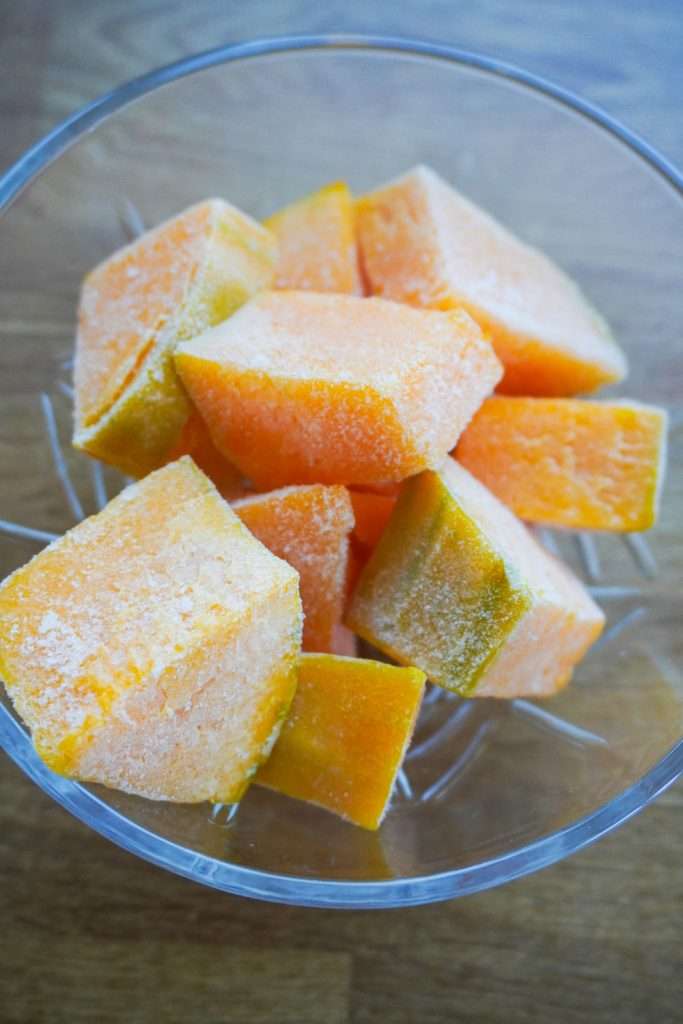
So here’s what you need to do to freeze butternut squash raw:
- Cut the butternut squash in half lengthwise.
- Scoop out the seeds with a spoon and either clean and save or discard them.
- Peel the butternut squash using a peeler or a peeling knife. This can get tricky because of the curves of the squash. I find that cutting it in quarters makes it easier to use the peeler.
- Chop the butternut squash into bite-sized pieces – lay it flat on a cutting board and chop away.
- Once you’ve got the pieces, fill into ziploc bags.
- When filled, lay the bag flat and distribute the butternut squash pieces evenly (so that you can stack the bags on top of each other in the freezer). Squeeze out the extra air on the top and before zipping completely (this will prevent oxidation/spoiling).
- Lay flat in the freezer and freeze.
- Once frozen, take out as many pieces as you need, close the bag and place back in the freezer (do not allow to thaw).
Method 2: Freezing Butternut Squash Puree
This method is best if you want to use a whole lot of butternut squash in your future recipes – aka it will be the main ingredient. It is best to make desserts or a creamy soup, for example. Since the butternut squash is already cooked and processed into a puree, you won’t be able to just grab a few chunks and add to whatever you’re cooking. You’d rather use the entire batch for your cooking. So choose wisely, how much puree you want to have in each freezer bag. Once you’re done with your decision making, here’s what you need to do:
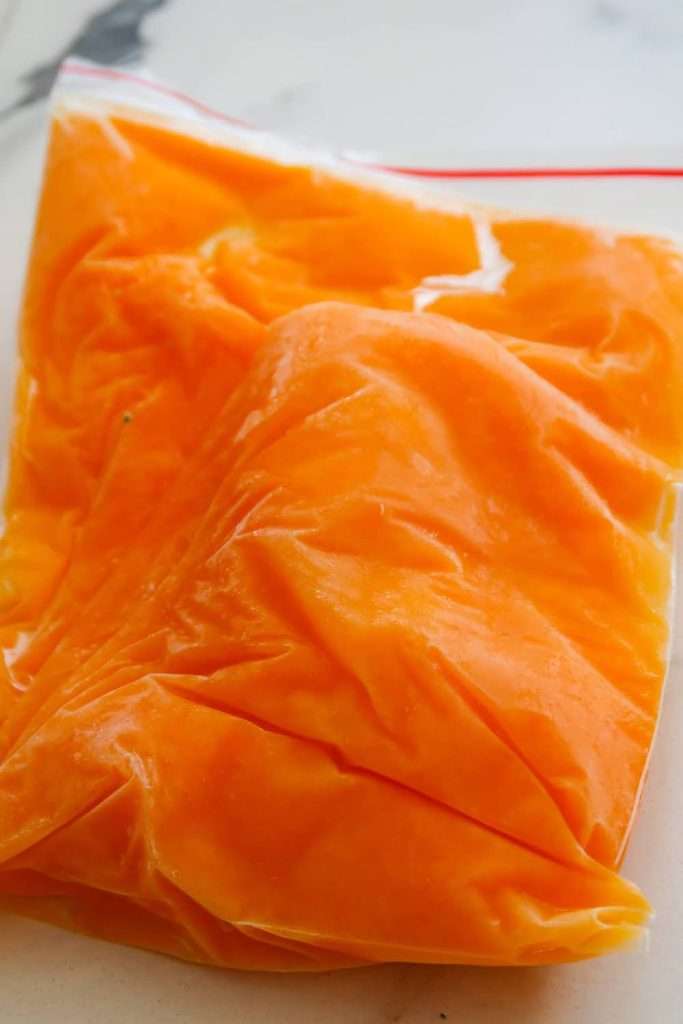
- Add butternut squash puree to freezer bags. I do this using a ladle or a large spoon – I think it’s less messy (that’s how I convince myself to stop putting it off and do it!).
- Once halfway full, lay the bag flat making sure to not spill any puree out.
- Then, carefully distribute the puree evenly in the bag coming close to the top.
- Close and put flat in the freezer, repeating for as much puree as you have.
- Stack the bags on top of each other.
Storing Frozen Butternut Squash
Once you’ve frozen the squash, make sure to not thaw and re-freeze, because it will lower the quality and will make the vegetable spoil faster.
Keep in the freezer and take out as many pieces as you need or use up the whole thing in case you’ve got the puree.
This isn’t something I do, but in case you want, you can add labels with the freezing date on the bags to make sure they’re still good to use. I freeze butternut squash only once a year, so I know if I have it – I must’ve frozen it in September/October.
Using Frozen Butternut Squash
You can use the frozen butternut squash pieces to make savory dishes like stews, soups or curries. You can use it in smoothies too!
Keep in mind that once frozen and thawed, the raw pieces will lose their texture. Much like frozen fruit – they become soft. In case you want to roast them and use in bowls or salads, they might be too mushy.
A great use for the butternut squash puree is making pie fillings, cakes or creamy soups.
More Foods To Freeze Now:
Now that you’ve worked on that butternut squash, you might want to consider preserving other foods too:
I hope you found this helpful and got a few ideas on how to use up that squash!